Sunday, May 12, 2013

Monkey-flowering Around

Image
White monkeyflower (Mimulus bifidus 'White')
Shrubby monkeyflowers (genus Mimulus) are a common site in the Bay Area, especially in the coastal scrub plant communities where they grow happily alongside sagebrush, chamise, coffeeberry, and others. In the spring, the plentiful orange flowers of Mimulus aurantiacus add a welcome dash of color to the greens and grays that typically dominate the landscape. Leaves have a characteristic sticky feel and plants can have a gangly, disheveled appearance in the wild.

In the garden, monkeyflowers have become very popular because they come in a wide variety of colors (orange, red, yellow, white, purple, etc.) and they bloom for a relatively long time over the spring and early summer. They are a magnet for hummingbirds and bees. Monkeyflowers in all their various forms can be found at most Bay Area nurseries, including Home Depot, where I recently saw the 'Jelly Bean Yellow' and 'Pink' varieties. Annie's Annuals and Yerba Buena Nursery probably have the best selection of monkeyflowers around, though be prepared to pay twice as much at Yerba Buena.

From my experience, monkeyflowers look best in the garden year round if they are in a part shade environment. In full sun, they will bloom well in Spring but then go completely dormant in Summer and Fall, turning an unappealing brown color. They will spring back to life with cooler temps and rain in late Fall, but most folks will be turned off by their appearance in summer. Behold the many faces of monkeyflower:

DSC_1254
'Junipero Serra' monkeyflower grows low and has proportionally large flowers

IMG_6027
Bush monkeyflower (M. aurantiacus), the wild form found all over the Bay Area
IMG_6029
 'Curious Orange' monkeyflower has very large red/orange flowers
IMG_6032
'Apricot' monkeyflower, with similar color to the wild form but better garden tolerance
IMG_6065
'Eleanor' monkeyflower, a wonderful garden performer
IMG_6039
Island bush monkeyflower (M. flemingii), a rare variety from the Channel Islands
IMG_6037
'Jelly Bean Yellow' monkeyflower

Friday, April 26, 2013

Pretty in Pink (for Molly R.)

Image
Western Redbud (Cercis Occidentalis) with Spring blooms
A while back I profiled the purple domination taking place in the front yard in early Spring. I would now like to highlight some of the pink-flowered plants occupying both the front and backyards. In the winter, the pink/white flowers of manzanitas and chaparral currants were peaking. In March, the brilliant floral display of the redbud, coral bells, and pink-flowering currants took center stage. Currently, the pinks of checkerbloom, sea thrift, hummingbird sage, and sea daisy are prominent. Later on, in summer and early fall, the pink hues of red-flowered buckwheat, santa cruz island buckwheat,  and island yarrow will dot the landscape.  Some photos, past and present:

Image
Rosy buckwheat (Eriogonum grande rubescens) thriving in the rock wall, July 2012
Image
Yarrow (Achillea millefolium 'Island Pink'), July 2012
Image
Chaparral Currant (Ribes malvaceum 'Dancing Tassels'), January 2013
Image
Pajaro manzanita (Arctostaphylos pajaroensis 'Warren Roberts'), February 2013
Image
Pink-flowering Currant (Ribes sanguineum 'Claremont'),  March 2013
Image
Hummingbird sage (Salvia spathacea), March 2013
Image
Trio of Sea thrift (Armeria maritima) requires daily watering in a pot
Image
Coral bells hybrid (Heuchera 'Canyon Belle'), April 2013
Image
Coral bells hybrid (Heuchera 'Lillian's Pink') will flower from February through Spring provided it has adequate shade

Tuesday, April 16, 2013

Road Trip to Southern California

California signage at the Rancho Santa Ana Botanic Garden

I just recently returned from a five day road trip that took me south down to Los Angeles, then up through Santa Barbara and San Luis Obispo. The primary goal of this journey was to visit as many gardens and parks as possible during the peak blooming season. As an added bonus, I was able to spend some quality time with a couple of close friends in LA and SLO. During my action-packed excursion, I visited four native gardens (Cal Poly Leaning Pine Arboretum, Nipomo Native Garden, Rancho Santa Ana Botanic, and Santa Barbara Botanic) and the Carpinteria Bluffs Nature Preserve and Seal Sanctuary, and hiked to the Hollywood sign in LA and Bishop's Peak in San Luis Obispo. In non-native news, I also watched the Oakland A's destroy the Anaheim Angels in Anaheim. Other than the A's victory, highlights were definitely the impressive Rancho Santa Ana Botanic and Santa Barbara Botanic gardens. I hope to soon share some photos and information about these native plant sanctuaries in the near future. But first a few random pictures from the trip:

IMG_5618
Protected seals on the beach in Carpinteria
Bench under Oak at Nipomo Native Garden
A shady retreat at the Nipomo Native Garden
Manzanita sign at the Nipomo Native Garden
Manzanita mania at the Nipomo Native Garden
Panoramic view of smoggy LA from behind Hollywood sign
Iconic view of LA from above the Hollywood sign
View from Bishop's Peak in San Luis Obispo looking northeast
View atop Bishop's Peak in San Luis Obispo

Saturday, April 6, 2013

Point Lobos State Natural Reserve

Image
Blooming ceanothus at the base of a Monterey cypress

Point Lobos, located just south of Carmel, is regarded by many as the "crown jewel" of the California state park system. After our recent visit to the park, I can see how one might come to that conclusion, especially on a warm Spring day when everything is bursting with fresh new growth and flowers.  The trails are well defined, relatively flat, and the views are outstanding. We hiked a loop that took us from Whaler's Cove, along the bluff to the Allen Memorial Cypress Grove, and finally to unprotected, wind-swept Sea Lion Point. Don't forget to pack a windbreaker. Some of what we saw along the trail:

IMG_5416
Iris (Iris douglasiana) and wood mint (Stachys bullata) a common site in shaded areas along trail
Image
Lots of life on the rocky cliffs of Point Lobos

Image
Old cypress with orange lace lichen
Image
Ceanothus in the foreground with Headland Cove and Sea Lion Point in the distance
Image
The windy bluff trail around Sea Lion Point


IMG_5448
The familiar coastal scrub palette that I love so much: sagebrush, coyote brush, lupines, seaside daisy and indian  paintbrush
IMG_5456
Looking south down the Big Sur coast

Friday, April 5, 2013

Asilomar Dunes Natural Preserve

IMG_5487
Beach entrance to the Asilomar grounds

This past weekend we took a trip down to the Monterey peninsula and stayed at the historic Asilomar Conference Grounds in Pacific Grove, CA. This sprawling complex, now in its 100th year of existence, is probably most famous for its ties to famed Hearst Castle architect Julia Morgan. Over the course of fifteen years, she designed sixteen Arts & Crafts style buildings on the Asilomar grounds, including Merrill Hall, pictured below.

Image
Merrill Hall, one of Morgan's creations, home to a women's quilting convention this particular weekend

I didn't really know what to expect from Asilomar. Reviews were lukewarm and there was rain in the forecast for our one day excursion. Upon arrival, I was immediately impressed with the architecture and the native plantings scattered about the grounds. Outside our rustic lodge room were blooming Douglas Iris and a very mature and stately flowering currant.  That night we were treated to the persistent patter of raindrops on the roof as we sat drinking beverages in front of a blazing fire. It was a truly memorable experience.

The next morning, the rain had subsided and we were able to explore the grounds. On our way down to the beach, we passed a native nursery fully stocked with plants in all stages of development.

Image
Asilomar native nursery proudly displaying their arsenal of plants

Information signs near the nursery detailed the massive effort underway to restore the dunes to "pre-European influence."  For years, the dune ecosystem had been devastated by sand mining, logging, grazing, resort development, and human traffic. In 1984, the California State Park service began rehabilitating the dunes by first collecting native seeds, and then establishing a nursery to propagate plants for revegetation purposes. Over the past few decades, invasive plants (e.g. ice plant) have been removed, sand has been shifted and shaped into more natural contours, and an extensive boardwalk has been constructed to give the viewing public a close up look at the revitalized dunes.

IMG_5482
Asilomar's winding boardwalk

Beach sagewort, coyote brush and lupines are certainly well represented on the dunes, as are verbenas, sea thrift and poppies.  Here are a few photos from the trail:

IMG_5478
Beautiful morning on the coast

IMG_5505
Beach sagewort, coyote brush and lupine entwined on the dunes

IMG_5473
Looking south toward Pebble Beach


IMG_5494
Sea Thrift (Armeria maritima) thriving on the coast

Friday, March 29, 2013

Purple Reign in the Garden

Image
Purple domination in the front yard, mid-March 2013
One of these days I will detail the process of how the front yard native garden came to be, but in the meantime, I'd like to share some images of the early Spring highlights. The manzanitas and chaparral currant have finished flowering and  passed the torch to the wild lilac, verbena, and wildly blooming CA scorpionweed (Phacelia californica). Dark blues and shades of purple rule here in late March, but help is on the way. The monkeyflowers (Mimulus) should soon provide shades of orange, and golden aster (Heterotheca 'San Bruno Mountain'), sulfur buckwheat (Eriogonum 'Shasta Sulphur'), golden yarrow (Eriophyllum confertiflorum), and spreading gum plant (Grindelia stricta) should pitch in with plenty of yellows. Most everything is looking healthy, with the exception of the hybrid sage (Salvia 'Winifred Gillman') which has fallen prey to insect infestation and may need to be removed. Now showing in the front yard:

Ceanothus 'Centennial' cascading over rock wall
Ceanothus 'Centennial' cascading over the rock wall

IMG_5362
The ever-popular Lilac Verbena 'De La Mina' (Verbena lilacina) grows in the parkway strip


IMG_5365
Aptly named California scorpionweed (Phacelia californica) is a bee magnet

Sedum spathulifolium purpureum
At home nestled amongst rocks is this stonecrop (Sedum spathulifolium purpureum)

IMG_5376
Fragrant Pitcher Sage (Lepechinia fragrans)

Friday, March 22, 2013

San Mateo Arboretum Society

Image
Poppies brighten the sign to the Central Park's 9th Ave entrance
           
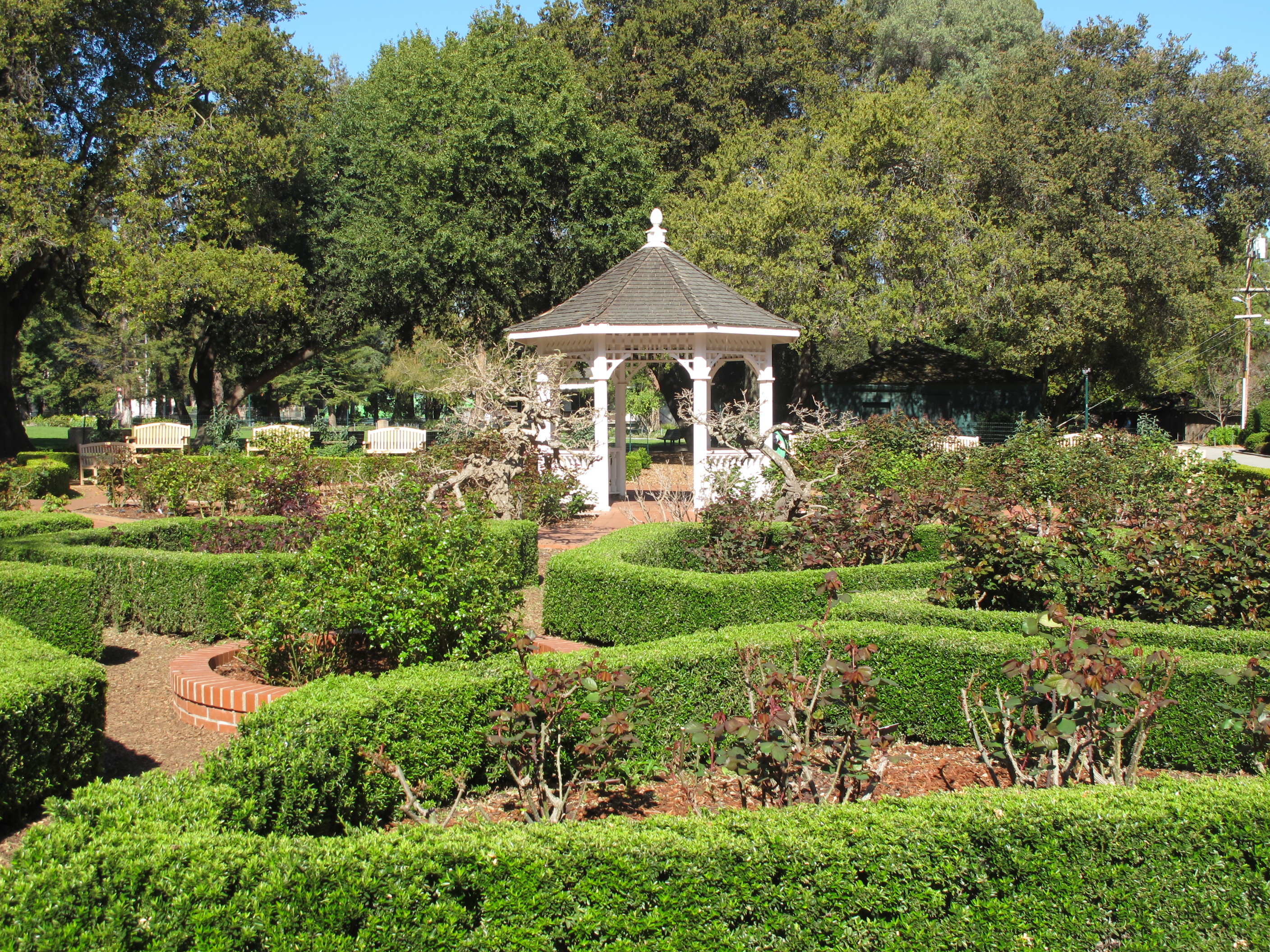
Just a few blocks from our house in San Mateo sits Central Park, a vast green oasis with a little something for everyone: a renowned Japanese Tea Garden for those seeking tranquility; a beautifully manicured rose garden for the flower fanatics (you know who you are!);  a softball field and tennis court for the jocks; a playground for the kiddies; and the ancient Kohl Pump House for the history buffs among us who would like a glimpse at what late 19th century Central San Mateo looked like.

Image
Rose Garden (sans roses)

On a leisurely stroll through the park one morning last year, I discovered a greenhouse next to the pump house with elderly women busily potting and watering plants. It seemed like an efficient and harmonious operation, and there were hundreds of plants neatly organized on tables . I inquired about native plants and a nice lady showed me to a small table with fifteen or so natives happily basking in the sun. For sale were sedum, penstemons, native roses, hummingbird sage, beach strawberry and sea thrift to name a few. They were reasonably priced at $5/gallon and $3/4" size. Contrast this with Yerba Buena Nursery that charges at least $13 for gallon plants.

Image
There is a native table at the greenhouse selling plants such as beach strawberry, penstemons and sages


The volunteer seemed to feed off my enthusiasm for native plants and decided to take me on a tour of the native plantings around Central Park. There is one partly sunny bed located near the Tea Garden that contains a random assortment of buckwheats (Eriogonum), ground cover manzanita (Arctostaphylos), monkeyflowers (Mimulus), seaside daisy (Erigeron), dune tansy (Tanacetum), and a robust  canyon sunflower (Venegasia).  The plants had only recently been planted and there was some evidence of trampled vegetation, which was difficult to see.

Image
Venegasia Carpesioides - Canyon sunflower

Image
Red-Flowered Mimulus - monkeyflower

The next stop on our tour was a small bed surrounding an entrance sign to the park. This arrangement featured CA poppies (Eschscholzia), lilac verbena (Verbena), sages (Salvia), matilija poppy (Romneya), and a very cool sundial.

Image
One of two native plant beds in the park. Clearly there is room to expand 


After my tour, I vowed to help expand the native plant table at the greenhouse. Thus far I have donated one round of cuttings but I need to do more. The San Mateo Arboretum Society is a very worthy cause that helps maintain the grounds around the pump house and hosts various garden classes and workshops. In the future I hope to dedicate more time in the greenhouse. If you get a chance, check out their website: sanmateoarboretum.org

Image